What should an onboarding package look like?
When you’re signing a new client, there’s a lot of information to share about what happens next, while setting the tone for the relationship and reaffirming the value that you’ve worked hard to convey to them.
An onboarding kit allows you to package it all up together in a way that’s simple—rather than adding to the complexity of their financial life, you want touch points that have the effect of organizing and clarifying. This means there are a number of elements common among effective onboarding packages:
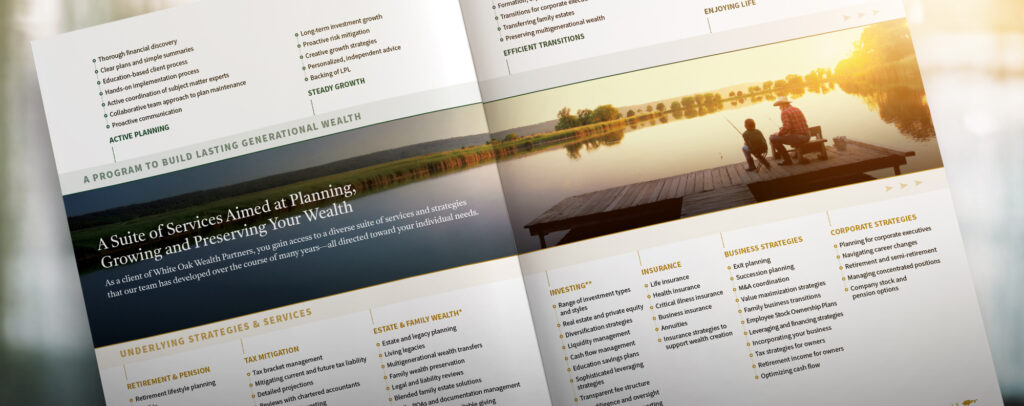
Discovery Touch Point
Depending on your unique client process, you may have a discovery piece that you need to share with clients at this time. Include a written questionnaire or financial documents checklist with, if possible, digital versions that they can complete through your website.
Service Overview
Through the prospecting process, you’ve likely already delved into the details of your service offering and capabilities. What works at this point is a one-page, at-a-glance visual that conveys the scope of what you can (and will) provide for this new client.
Client Resources
Summarize all the resources this individual will have access to now that they’re a client of yours. This might include something like a financial dashboard, for which you can include practical information, or your network of professional partners.
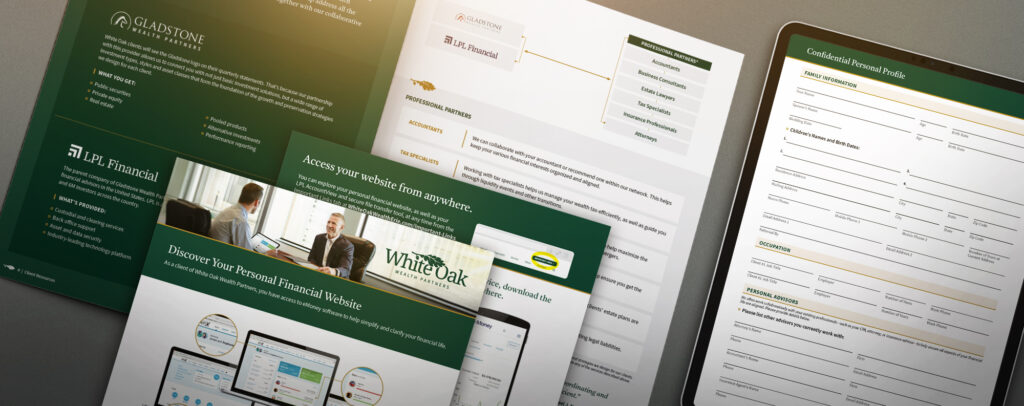
Our Structure
It can be helpful for a client to walk away from this meeting with a clear understanding of the structure of your firm, and a tangible reminder that they can reference in the future. Whether you’re independent or part of a wirehouse or bank, provide a tool that visualizes these relationships.
Contacts
Financial advice is a personal service. Include a contact sheet that puts a face to a name for each member of your team and clearly outlines each person’s role. This has practical value, but it also reinforces the idea that this client now has a team actively working toward their goals, ready to take their call or answer their email.
Next Steps
Client onboarding meetings naturally end with one question: What happens next? Providing a clear outline—again, in a simple, digestible format—helps convey that you are a practiced team with a time-tested process that they can rely on.
Building your onboarding package around these items can help you address the questions and uncertainties that soon-to-be clients have at this point in the relationship, so that you can strengthen commitment and start off on the right foot.
